Are you thinking about launching your own food business, but don’t know which direction to take? Then, you’re not alone. Many startup founders who want to get into the food business struggle with finding the right idea.
However, one of the reassuring things for you is that, however crowded the food space gets, there’s always room for more. You can capture that opportunity by finding food and beverage business ideas that align with your budget, skills, and market gap.
This blog aims to solve this issue. By reading this blog, you’ll get a list of 15 of the most profitable food business ideas, what makes them financially viable, and how to choose the best one for your startup.
15 Trending Food Business Ideas to Watch (and Launch) in 2026
The food industry is moving at a rapid pace. Every year, new concepts come to the forefront, start from zero, and in a few years become the best in the business. The reason for their success is not a massive budget, but picking the right business idea at the right time.
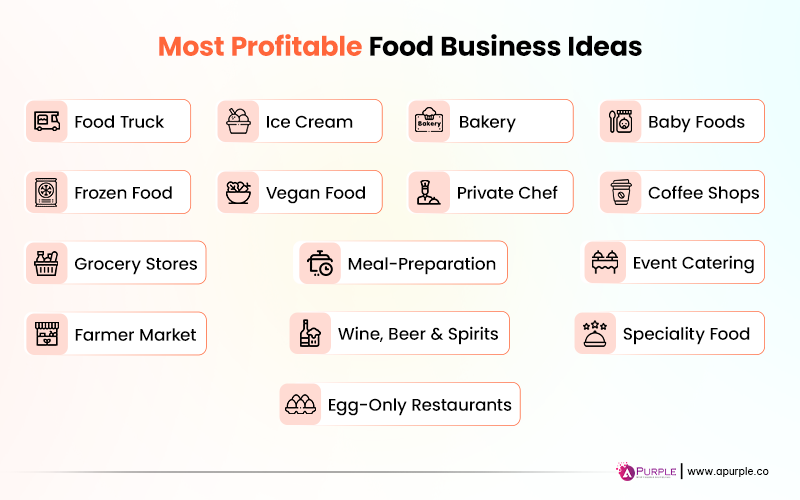
Based on our years of experience in food startup solutions, industry surveys, and expert advice, we have compiled a list of 15 of the simplest food business ideas gaining momentum in 2026:
Trending Food Business Ideas:
1. Food Trucks
-
Startup Investment:
$50K – $200K
-
Time to Launch:
2–4 months
-
Break-even Timeline:
12–18 months
-
Typical Daily Orders:
80–150
-
Difficulty Level:
Medium
-
Best For:
First-time food entrepreneurs
If you want to test your food idea in the real world with minimum risk, then food trucks are one of the most creative food business ideas that you can opt for. The global food truck market will reach $7.87 billion by 2030, so the opportunity in this space is tremendous. You just need to pick your ideal location, set up a food truck where your customers are most likely to visit, and adjust if something is not working. If you want to validate a niche cuisine before building a restaurant, you should choose this option.
Benefits |
Challenges |
|---|---|
| Lower overhead compared to traditional restaurants. | The health regulations, food safety permits, and zoning laws vary by city. |
| Higher mobility enables you to stay up to date on current trends and demands. | There’s a huge dependency on the weather to run your food truck. |
| You can become profitable much faster than a restaurant. | You get a very limited kitchen space, so menu items and preparation speed are limited. |
| With limited-time specials and location drops, you can easily create a social media buzz. | There can be a sudden spike in your operating costs due to vehicle maintenance and repairs. |
Examples of Successful Food Truck Businesses:
2. Ice Cream Parlour
-
Startup Investment:
$20K – $300K
-
Time to Launch:
2–4 days
-
Break-even Timeline:
3-4 months
-
Typical Daily Orders:
100-300
-
Difficulty Level:
High
-
Best For:
Founders targeting high-footfall, experience-driven markets
As a startup founder, if you’re looking for business ideas in the food industry with a higher profit margin and repeat customers, an ice cream parlour should be your best bet. The global ice cream market is expected to reach USD 17,202 million by 2030, driven by dairy-free options, experimental dining, and artisan flavors. With low upfront costs and strong community appeal, this model works well in urban areas, theaters, and high-traffic areas.
Benefits |
Challenges |
|---|---|
| Profit margin is very high. | Revenue is purely seasonal. |
| Very strong customer loyalty and retention. | You need to innovate a lot to stand out in this space. |
| Lower barrier to entry compared to a restaurant. | High maintenance and cold storage equipment costs. |
| Easier to build your brand identity with unique flavors and aesthetic spaces. | Maintaining the quality of your ingredients is very hard. |
Examples of Successful Ice Cream Parlours:
3. Grocery Stores
-
Startup Investment:
$25K – $400K
-
Time to Launch:
6 months
-
Break-even Timeline:
6 months to 3 years
-
Typical Daily Orders:
600-1000
-
Difficulty Level:
High
-
Best For:
Founders building steady, community-anchored businesses
If you’re in search of ideas to start a food business that has daily demand and is recession-proof, then you should think about opening a grocery store. You can build a long-term, profitable business by creating a grocery store around locally sourced, organic, and ethnic products. The well-established players in the grocery space can’t move as fast as a local startup or go as deep as your nearby store. That could become your added advantage.
Benefits |
Challenges |
|---|---|
| Steady and recurring revenue. | The profit margin is very thin on conventional products. |
| You can build a loyal community by focusing on local products. | Higher upfront cost for inventory, refrigeration, and retail space. |
| Amazing opportunity to stand out from big brands by focusing on local and organic products. | Building a supply chain takes a lot of time. |
| You can scale it through online orders, local delivery, and subscriptions. | You’re always competing with giants like Whole Foods or Walmart. |
Examples of Successful Grocery Stores:
4. Event Catering
-
Startup Investment:
$10K – $80K
-
Time to Launch:
6-12 months
-
Break-even Timeline:
3 months
-
Typical Daily Orders:
1–1.2 pounds of food/person
-
Difficulty Level:
Low
-
Best For:
Founders who thrive on flexible, relationship-driven work
As a startup founder, if you’re looking for a small food business idea that can scale without massive capital expenditures, event catering could be your best bet. You can tap into weddings, corporate events, and pop-ups to deliver a custom menu based on customer demand. One of the USPs of event catering is the potential to reduce inventory waste, which could lead to high profit margins. You can easily build loyalty via apps for seamless booking in this business.
Benefits |
Challenges |
|---|---|
| Low upfront cost to start this business. | Unpredictability is related to the number of events that you may get in a month/year. |
| Very high profit margin. | There are many logistics you need to manage to ensure timely delivery, which increases costs. |
| You can easily scale this via apps for booking and payments. | Massive competition in urban pockets. |
| Customer acquisition is very quick. | There are bound to be some dips and peaks as per the season. |
Examples of Successful Event Catering Businesses:
5. Meal Preparation
-
Startup Investment:
$7K – $50K
-
Time to Launch:
6-9 months
-
Break-even Timeline:
5-12 months
-
Typical Daily Orders:
50-100 meals/week
-
Difficulty Level:
Moderate
-
Best For:
Founders targeting health-conscious, time-strapped customers
In search of ideas for starting a food business that is profitable and easy to scale? Then, meal preparation could be the right choice for you. Here, you need to curate a healthy menu for your customers, prepare the meals, and deliver them fresh to urban hustlers who don’t have time to cook. You can offer a subscription plan to your end users to build customer loyalty and generate recurring revenue for your business.
Benefits |
Challenges |
|---|---|
| You can launch quickly and optimize with a low upfront cost. | Sourcing fresh ingredients to maintain food quality is a challenge. |
| You can build a predictable revenue stream with subscription plans. | Scaling the kitchen without proper testing procedures can degrade taste. |
| With the right application, you can easily hook tech-savvy urban customers. | You need to deal with competition from well-established local players. |
| You can increase profit margin with a direct-to-customer model. | Any logistics goof-ups can kill customer trust. |
Examples of Successful Meal Preparation Businesses:
6. Speciality Food Store
-
Startup Investment:
$350K – $600K
-
Time to Launch:
8-12 months
-
Break-even Timeline:
15-26 months
-
Typical Daily Orders:
100
-
Difficulty Level:
High
-
Best For:
Founders passionate about niche, curated food experiences
A speciality food store is one of the food business startup ideas with a low barrier to entry, and you can focus on a micro-niche. Here, you can focus on artisan foods, gourmet imports, or vegan treats. The focus is on curating high-margin items such as organic spices or gluten-free snacks. You can easily scale from one physical store to an online delivery model in this business. It’s just that you need to target Tier 1 or Tier 2 cities, as they are in search of this kind of food.
Benefits |
Challenges |
|---|---|
| As you’re selling rarely available products, your chances of going viral increase. | Testing new food items to determine whether they can succeed can waste a lot of money. |
| The business can grow very fast, and you can add online shipping within 6 months. | Getting rare products from the supplier takes time, thereby slowing down delivery. |
| There’s a chance of high customer retention due to the kind of rare products you sell. | You need to pivot every 6 months as the trend of rare food items changes very quickly. |
| You can start with a very small investment upfront and get things moving. | Food regulations and compliance take a lot of time in this food category. |
Examples of Successful Speciality Food Stores:
7. Private Chef
-
Startup Investment:
$1K – $4K
-
Time to Launch:
7-10 weeks
-
Break-even Timeline:
17-28 months
-
Typical Daily Orders:
10-12 meals
-
Difficulty Level:
High
-
Best For:
Founders offering premium, high-touch personalized services
A private chef is one of the best food business startup ideas if you don’t want to invest much at the beginning and want to maximize your profit margins. Here, you cook personalized meals at private gatherings, events, or clients’ homes, and the target audience is busy executives and business tycoons. You don’t need to lease a restaurant to start this venture; just build an app, put your uniquely curated menu in it, and see if it’s gaining traction among your target audience.
Benefits |
Challenges |
|---|---|
| The profit margin is very high, with no staff required and no need to lease commercial kitchen space. | There may be inconsistencies in bookings early on. |
| Lower barrier to entry as you’re targeting a very niche audience, and there are few competitors in the market. | Planning your logistics effectively is a huge task. |
| You can dominate a particular niche in the saturated food business market. | As you’re the sole person in this business, scaling can be an issue. |
| With a subscription program, you can build a loyal customer base and generate recurring revenue. | Food regulations and permission requirements vary by city/state. |
Examples of Successful Private Chef:
8. Coffee Shops
-
Startup Investment:
$80K – $350K
-
Time to Launch:
6-12 months
-
Break-even Timeline:
6-18 months
-
Typical Daily Orders:
220-400
-
Difficulty Level:
High
-
Best For:
Founders building loyal, community-centered repeat businesses
Coffee shops are one of the most profitable food business ideas in the modern world. You don’t need any external funding to start this business; you can bootstrap by renting a nice, cosy space and converting it into an aesthetically pleasing area for coffee connoisseurs. Many urban people are looking for a good coffee place nearby, and you can capitalize on this by offering premium brews and cold coffee made with the best-roasted beans.
Benefits |
Challenges |
|---|---|
| Not much capital upfront is needed to start this business. | The competition in this space is very high, so you need to create differentiation to ensure long-term survival. |
| You can generate recurring revenue by offering loyalty programs through an app. | If there are any hiccups in the supply chain, your operating cost can increase very quickly. |
| It’s easier to scale this business by expanding into multiple locations or on a franchise basis. | Managing peak hours in the initial days with a small staff can be challenging. |
| You can host musical events, stand-up, or offer merchandise, which can become a strong upsell revenue stream. | Maintaining the quality of your coffee beans and quick-serving items is tricky. |
Examples of Successful Coffee Shops:
9. Baby Foods
-
Startup Investment:
$500K – $10 million
-
Time to Launch:
6-12 months
-
Break-even Timeline:
18-36 months
-
Typical Daily Orders:
40-100
-
Difficulty Level:
High
-
Best For:
Founders targeting safety-conscious, trust-driven parent markets
The baby food market is growing rapidly, with today’s millennial parents constantly seeking clean, organic baby food products rather than the typical preservative-laden, mass-produced options. So, as a startup founder, if you’re in search of innovative ideas for the food business, then you should explore this niche. Parents are ready to pay a premium for safe, healthy baby food options, which could be an added advantage for you.
Benefits |
Challenges |
|---|---|
| Customer loyalty and retention are very high, with parents likely to stick with a single good brand they like. | You need to comply with stringent FDA regulations regarding labelling, ingredients, and safety. |
| You can generate recurring revenue by offering loyalty programs through an app. | If there are any hiccups in the supply chain, your operating cost can increase very quickly. |
| You can get premium pricing if you can maintain a high quality of products. | If there’s a minor issue or a health concern, your brand reputation can be severely damaged. |
| With the help of a monthly/yearly subscription, you can create a recurring revenue channel. | Maintaining a cold storage adds to operational costs. |
| With the growing demand for organic and allergen-free products, you can expand your total addressable market. | Making a name for yourselves in an already crowded market can be challenging. |
Examples of Successful Baby Foods Businesses:
10. Wine, Beer & Spirits
-
Startup Investment:
$200K – $1 million
-
Time to Launch:
1-5 years
-
Break-even Timeline:
14-38 months
-
Typical Daily Orders:
10-15
-
Difficulty Level:
High
-
Best For:
Founders entering regulated, loyalty-driven beverage markets
The alcohol beverage space is not going to slow down anytime soon. Therefore, if you’re someone looking for some unique food business ideas, you should think about selling wine online or moving into the beer or spirits market. Nowadays, boutique wineries, artisan spirits, and craft breweries are generating massive revenue. Customers of this age are looking for local, unique brands rather than relying solely on big names, so take advantage of this trend.
Benefits |
Challenges |
|---|---|
| You can get a premium price if you can deliver unique products. | Alcohol licensing and permits vary by state. |
| There’s strong customer loyalty when users connect with your brand story. | You need to pay a higher upfront cost for equipment and inventory. |
| You can easily scale your business through direct-to-consumer and subscription models. | There’s massive competition from well-established brands. |
| There’s a growing demand for locally sourced drinks. | Maintaining a cold storage adds to operational costs. |
Examples of Successful Wine, Beer & Spirits Businesses:
11. Bakery Business
-
Startup Investment:
$10K – $200K
-
Time to Launch:
6-12 months
-
Break-even Timeline:
12-18 months
-
Typical Daily Orders:
15-20
-
Difficulty Level:
High
-
Best For:
Founders blending creativity with high-volume repeat demand
The bakery business is one of the most community-oriented online food business ideas that you can start right now. Today’s customer focuses on gluten-free, sugar-free, allergen-free, and customized-crafted bakery products. Also, they prefer ordering items online from the comfort of their home or office, and you can take advantage of this fact by building a trendy bakery.
Benefits |
Challenges |
|---|---|
| Lower initial cost compared to starting a full-fledged restaurant. | You get a thin margin if you just sell standard products. |
| According to consumers’ daily habits, repeat purchases are higher in this space. | You need to get up early to run this business successfully. |
| You can easily choose a niche – gluten-free, sugar-free, or custom orders. | Product shelf life is short, so the risk of wastage is high. |
| Since the business is visually appealing, you can go viral on social media. | Scaling production without losing unique handcrafted skills is challenging. |
Examples of Successful Bakery Businesses:
12. Egg-Only Restaurants
-
Startup Investment:
$140K – $650K
-
Time to Launch:
6-12 months
-
Break-even Timeline:
6-7 months
-
Typical Daily Orders:
100-200
-
Difficulty Level:
High
-
Best For:
Founders betting on bold, hyper-niche concept dining
If you’re exploring street food business ideas with a small and repeatable menu that has very low upfront costs, then you should think about an egg-only restaurant. Nowadays, people are seeking authenticity and expertise in specific cuisines and dishes, which is why the number of single-concept restaurants is growing rapidly. Eggs are universally loved, healthy, and a high-protein breakfast item, so there’s every chance of getting success in this business.
Benefits |
Challenges |
|---|---|
| The ingredient cost is extremely low. | The menu only works at breakfast and brunch, not all day. |
| A simple and single-cuisine-focused menu reduces kitchen complexity and waste. | Because egg prices change every other day, profit margins are unpredictable. |
| There’s strong alignment with high-protein, healthy eating, which is the current trend. | As it’s a niche concept, it requires strong differentiation and branding. |
| You can easily replicate and scale this business across multiple locations. | The number of customers you have heavily depends on your location and current footfall. |
Examples of Successful Egg-Only Restaurants:
13. Vegan Food
-
Startup Investment:
$50K – $500K
-
Time to Launch:
3-6 months
-
Break-even Timeline:
4-12 months
-
Typical Daily Orders:
50-100
-
Difficulty Level:
High
-
Best For:
Founders tapping into a fast-growing, values-driven consumer base
Vegan food is no longer a trend; it has become part of the daily routine for many Gen Z and millennial people nowadays. Health-conscious people, flexitarians, and sustainability-driven customers are increasingly turning to plant-based diets. That’s where vegan food can be one of your most innovative food business ideas because you’re not just selling food, but you’re selling a lifestyle identity that people want to opt for.
Benefits |
Challenges |
|---|---|
| You can build a fast-growing, value-driven customer base with strong loyalty. | Sourcing these ingredients costs you much more than traditional food items. |
| You can charge a premium, and customers are ready to pay it for a plan-based diet. | Meeting customers’ exact taste and texture requirements is hard. |
| A very strong organic social media reach with community-driven marketing. | There is fierce competition from well-established brands. |
| As the business backs sustainability, you build strong partnerships with other major brands that share the same values. | Convincing non-vegan consumers to buy your products is very challenging. |
Examples of Successful Vegan Food Businesses:
14. Frozen Food Service
-
Startup Investment:
$110K – $700K
-
Time to Launch:
3-8 months
-
Break-even Timeline:
23-36 months
-
Typical Daily Orders:
50-100
-
Difficulty Level:
Moderate
-
Best For:
Founders scaling convenience-focused, low-waste food operations
If you’re researching food delivery business ideas that can scale without a physical storefront, frozen food service is one of the first names that you should have on your list. There is a drastic change in frozen food nowadays. Customers don’t want to buy microwave meals; they want portion-controlled, clean-labeled, and convenient frozen food options. One of the biggest USPs of this business is a longer shelf life, which means less wastage and more predictable inventory.
Benefits |
Challenges |
|---|---|
| A longer food shelf life means less waste and reduced operational costs. | Managing cold chain logistics is very expensive. |
| You can easily scale this D2C model and create recurring revenue with subscriptions. | High upfront cost related to cold storage, packaging, and shipping. |
| Less pressure on operations compared to fresh food businesses. | Breaking the consumer’s perception of frozen food = less premium requires a lot of effort. |
| The total addressable market is larger, with niche markets such as healthy, diet-specific, and ethnic foods. | It’s a highly competitive market to break into. |
Examples of Successful Frozen Food Businesses:
15. Online Farmers Market
-
Startup Investment:
$500K – $1 million
-
Time to Launch:
1-9 months
-
Break-even Timeline:
16-26 months
-
Typical Daily Orders:
50-150
-
Difficulty Level:
High
-
Best For:
Founders connecting local producers with conscious consumers
Today’s customers don’t want groceries that come from far away with unknown sources. They want local, traceable, and fresh food directly from farm to plate by eliminating the middleman. That’s where the online farmer marketplace comes into play, connecting urban buyers with local farmers and food producers. If you’re looking for small food business ideas that have a great balance between profit and purpose, then you should consider this option.
Benefits |
Challenges |
|---|---|
| If you’re building a marketplace, there isn’t much to invest in at the initial stages. | Seasonal supply makes inventory management difficult. |
| You can increase customer loyalty, driven by local and sustainable values. | Creating trust with both farmers and end users is challenging. |
| As grocery shopping is a daily habit, the repeat-purchase ratio is pretty high. | You need reliable cold chains to deliver fresh and perishable food items. |
| Massive differentiation against the big grocery brand of delivering fresh food. | Competing with a well-established farm marketplace is a massive task. |
Examples of Successful Online Farmer Markets:
What are the Most Profitable Food Business Ideas in Your Country?
The food industry is never going to slow down, and if you want to use this massive opportunity to your advantage, you don’t need a big budget but a lean, profitable startup food business idea.
So far, we discussed the food business ideas that are topping the charts globally. But where you start your food business also matters, and with the rise of on-demand service app ideas, even a hyperlocal food concept can scale quickly beyond its neighborhood. That’s why we have compiled a list of profitable small food business ideas by country, as food preferences vary by country and culture.
Most Profitable Food Business Ideas in the Philippines
- Cloud Kitchens (Ghost Kitchens)
- Rice Meal Stalls (Carinderia / Turo-Turo)
- Street Food & Merienda Kiosks
- Specialty Coffee & Tea Carts
- Healthy Meal Prep & Diet Subscriptions
- Home-Based Online Bakery
- Frozen & Ready-to-Cook Foods
- Bottled & Preserved Goods (Chilli Oil, Sauces, Pickles)
- Food Trucks & Mobile Food Carts
- Pet Food & Homemade Pet Treats
Most Profitable Food Business Ideas in the USA
- Cloud Kitchens (Ghost Kitchens / Virtual Restaurants)
- Food Trucks & Mobile Catering
- Specialty Coffee & Third-Wave Coffee Shops
- Quick Service Restaurants (QSR)
- Personal Chef & Meal Prep Services
- Pet Food & Gourmet Treat Bakeries
- Healthy Fast Casual (Salad & Bowl Concepts)
- Artisanal & Craft Bakeries
- Farm-to-Table Fast Casual Concepts
- Juice & Smoothie Bars
Most Profitable Food Business Ideas in the UK
- Cloud Kitchens (Dark Kitchens)
- Food Trucks & Mobile Catering
- Specialty Coffee Shops
- Artisanal & Craft Bakeries
- Healthy Meal Prep & Subscriptions Services
- Vegan & Plant-Based Food Brands
- Event Catering & Private Dining
- Personal Chef Services
- Craft Beverage Production (Kombucha / Small Batch Drinks)
- Pet Food & Gourmet Pet Treats
Most Profitable Food Business Ideas in Brazil
- Cloud Kitchens
- Healthy & Functional Food Bars
- Specialty Coffee & Coffee Bar Cafes
- Plant-Based & Vegan Restaurants
- Quick-Service Burger & Pizza Franchises
- Artisanal & Specialty Bakeries
- Meal Prep & Diet Subscription Services
- Organic & Sustainable Produce Retail
- Frozen & Heat-and-Eat Gourmet Meals
- Açaí & Tropical Fruit Bowl Kiosks
Most Profitable Food Business Ideas in Malaysia
- Cloud Kitchens
- Nasi Lemak & Breakfast Stalls
- Specialty Coffee & Artisan Cafes
- Healthy Meal Prep & Subscriptions Services
- Frozen & Ready-to-Eat Halal Foods
- Boba Tea & Beverage Kiosks
- Burger & Western-Style Food Trucks
- Dessert & Pastry Specialty Shops
- Pet Food & Gourmet Pet Treats
- Home-Based Online Food Businesses
Most Profitable Food Business Ideas in Canada
- Cloud Kitchens
- Food Trucks & Mobile Catering
- Specialty Coffee & Tea Shops
- Healthy Meal Prep & Subscriptions Services
- Artisanal & Craft Bakeries
- Pet Food & Gourmet Pet Treats
- Quick Service Restaurants (QSR)
- Plant-Based & Vegan Food Concepts
- Juice & Smoothie Bars
- Ethnic Specialty Grocery & Prepared Foods
Most Profitable Food Business Ideas in Australia
- Cloud Kitchens
- Specialty Coffee Roasteries & Cafes
- Health-Focused Fast Casual Restaurants
- Plant-Based & Vegan Eateries
- Artisan Bakeries & Patisseries
- Premium Meal Prep & Subscription Services
- Juice & Wellness Bars
- Pet Food & Organic Treat Bakeries
- Gourmet Food Trucks
- Craft Beverage Production (Cold Brew / Kombucha)
Most Profitable Food Business Ideas in the UAE
- Cloud Kitchens
- Specialty Coffee Shops
- Healthy Meal Prep & Subscriptions Services
- Gourmet Food Trucks
- Vegan & Plant-Based Restaurants
- Juice & Smoothie Bars
- Artisanal Bakeries & Patisseries
- Pet Food & Organic Treat Bakeries
- Organic & Health-Focused Grocery Retail
- Quick Service Restaurants (QSR)
Summing Up
Two things should be very clear after reading this blog:
- You don’t need a huge amount of capital to be successful in the food space.
- You need the right idea, the right timing, the right planning, and the right technology.
So, you should always ask yourself:
- Do your food business ideas solve a real issue for customers?
- Can it scale without burning your capital?
- Is the technology that is facilitating your business’s growth?
If you’re still confused about these things, connect with aPurple.
We have helped many food startups build scalable, reliable food business solutions that have helped them grow leaps and bounds.
Food space isn’t waiting for anyone, so why should you wait? Book a consultation call with our industry experts and avail a detailed roadmap to launch your startup.
Frequently Asked Questions (FAQs):-