Updated Date: Apr 23, 2026
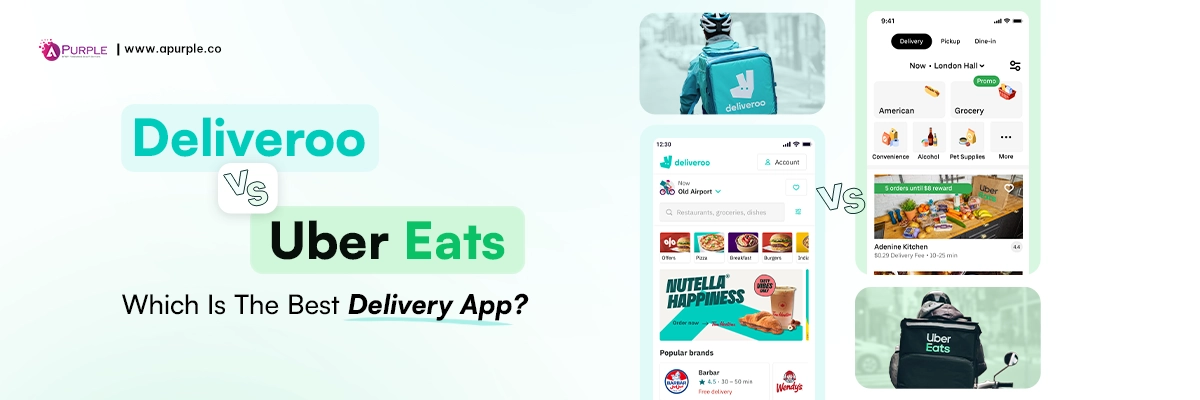
A founder launches a food delivery startup with a solid idea. Early growth looks promising, but stalls after a time; the real problem shows up late. The business model was never clear. That is where comparing Uber Eats or Deliveroo becomes critical.
One focuses on speed, wide choices, and repeat orders, while the other builds around premium restaurants. Both apps grow, but in very different ways. Choosing the wrong one for your business can drain time, money, and effort.
To choose the correct model, you need to understand the difference between Uber Eats vs Deliveroo business models, or which model gives faster ROI?
This blog helps you avoid wrong bets and shows how to pick the right app for your MVP, growth, and long-term scale.
What is Deliveroo?
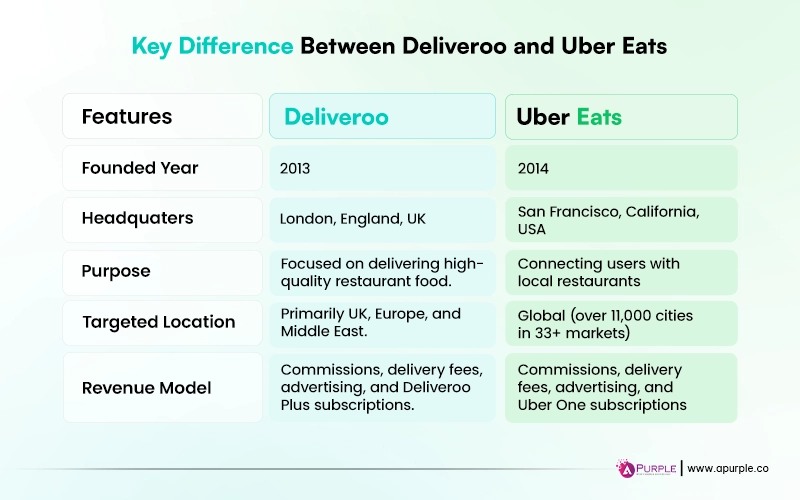
Deliveroo is a multinational British food delivery app that operates a three-sided marketplace. It connects customers, local merchants like restaurants, grocers, and retailers, and a network of riders.
Established Year:
2013
Headquarters:
London
Service Covered:
The platform was created to bring high-quality restaurant food, which didn’t offer takeaway at the time. As of late 2025, Deliveroo is a subsidiary of the American delivery giant DoorDash, following a £2.9 billion acquisition.
What is Uber Eats?
Uber Eats is a global online platform where users can order food, groceries, and other retail items. Started by the ride-hailing company Uber in 2014, it lets users easily browse menus from nearby restaurants and stores using an app and get items delivered to their door by independent couriers.
Established Year:
2014
Headquarters:
San Francisco, California, U.S.
Service Covered:
Uber Eats provides globally on-demand delivery for both prepared restaurant meals and essential grocery or retail items.
Deliveroo & Uber Eats: How Do They Work?
Deliveroo and Uber Eats both operate three digital marketplaces that connect customers, restaurants, and couriers through mobile apps. The basic functionality covers customers’ orders, restaurants prepare, and independent couriers deliver. Both apps offer real-time tracking, similar fee structures for restaurants, and similar earnings options for couriers.
Key Working Differences for Uber Eats & Deliveroo
| Aspect | Uber Eats | Deliveroo |
|---|---|---|
| Rider Flexibility | Offers flexible working hours; riders can go online anytime | Uses structured 1-hour scheduling slots |
| App Functionality | Provides in-app maps with direct navigation via a single click | Requires scanning each order at pickup |
| Market Strength | Massive global presence & US dominance. | Strongest in the UK and Europe. |
| Tipping & Payouts | Tips are less frequent compared to Deliveroo (as reported by drivers) | Users tend to tip more frequently, making it better for tips |
| Customer Support | Self-service help center & automated bot. | Live in-app chat & phone support. |
| Order Management | Focuses on real-time tracking with push notifications | Offers faster and more frequent batching (multiple orders) to riders |
Comparative Overview Between Deliveroo and Uber Eats
| Feature | Deliveroo | Uber Eats |
|---|---|---|
| Core Partnership | Often in partnership with upmarket chains. | Major global chains like Starbucks. |
| Logistics Tech | Optimized for urban bike/scooter speed. | Massive driver network integrated with Uber rides. |
| Subscription Plan | Deliveroo Plus (free delivery & exclusive offers). | Uber One (Free delivery & Uber ride discounts). |
| Fees for Users | Generally consistent; service fee and delivery fee. | Dynamic surge pricing during busy periods. |
| Unique Innovation | Editions: Delivery-only dark kitchens for brands. | Autonomous: Increasing use of delivery robots & self-driving cars. |
| Customer Support | Known for fast, often automated “instant” credit/refunds. | Primarily chat-based; it can vary depending on the driver/merchant fault. |
| Primary Strength | Premium & high-end restaurant selection. | Vast availability & frequent promotions. |
| Grocery Partners | Waitrose, Sainsbury’s, M&S, and Co-op. | Tesco, Asda, Morrisons, and Shell. |
Difference Between Deliveroo Vs. Uber Eats: Detailed Analysis
1. Deliveroo vs. Uber Eats: Pros & Cons
Deliveroo is used to offer premium choices, which focus on high-quality local and established restaurant chains.
| Feature | Benefits | Limitations |
|---|---|---|
| Selection | Curated list of high-end local restaurants. | Higher delivery and service fees than competitors. |
| User Experience | Clean and highly informative app with tracking and transparent ETAs. | Delivery radius can be more restricted than Uber Eats. |
| Customer Service | Faster at resolving issues and issuing refunds for cold or missing items. | The Deliveroo Plus subscription is tiered, which can be confusing. |
2. Uber Eats: Benefits & Limitations
Uber Eats uses its global logistics network for speed and high-frequency discounts.
| Feature | Benefits | Limitations |
|---|---|---|
| Availability | Global geographic coverage. Available in smaller towns where Deliveroo isn’t. | Customer support is notoriously difficult to reach and often automated. |
| Deals | Constant offers and promo codes. | Cluttered UI with ads and sponsored listings. |
| Ecosystem | “Uber One” membership covers both food delivery and Uber rides. | Menu prices are higher than the physical restaurant’s. |
3. Ratings & Reviews
- App Stores: Both apps maintain a 4.7+ star rating, but Deliveroo is frequently praised for its order accuracy, while Uber Eats is cited for delivery speed.
- Trustpilot: Both suffer from lower scores here (common for logistics), but Deliveroo typically edges out Uber Eats due to better dispute resolution.
4. Drivers & Gig Workers
- Deliveroo: Riders can reject any order without affecting their account standing. A zone-based system reduces travel time.
- Uber Eats: A seamless login to work anywhere at any time. Pay is based on a pick-up fee, drop-off fee, and per-mile rate.
5. Pay & Pricing
| Category | Deliveroo | Uber Eats |
|---|---|---|
| Delivery Fees | £0 – £4.99 (Based on distance) | £0.79 – £3.99 (Variable) |
| Service Fee | Approx 5% of the subtotal | Approx 10% of the subtotal |
| Subscription | £3.49/mo for Silver or £4.99/mo for Gold. | £4.99/mo or £49.99/year. |
| Rider Pay | Average £10–£15 per hour. | Average £9–£14 per hour. |
Who makes more money, Deliveroo or Uber Eats?
At the corporate level in Uber Eats or Deliveroo, Uber Eats makes significantly more money. Uber Eats is operating on a much larger global scale. While Deliveroo reached its first year of net profit in 2025, its revenue and total transaction value are a fraction of those reported by Uber’s delivery segment.
Corporate Financial Comparison (2025)
| Metric | Uber Eat | Deliveroo |
|---|---|---|
| Annual Revenue | £10.8 billion | £2.07 billion |
| Gross Transaction Value | $74.6 billion | £7.4 billion |
| Adjusted EBITDA | USD 2.5 billion (Q4 run-rate) | £170–190 million (Est.) |
Which app pays drivers more, Uber Eats or Deliveroo?
For individual gig workers, the difference is less, as it’s more about local demand.
- Pay Structure: Uber Eats pays based on mileage and distance. Deliveroo pays a flat fee per delivery or a distance-based fee.
- Earnings: Both platforms offer between £10 and £15 per hour. However, it depends on the time of day.
Final Choice of The Best Food Delivery App Solution!
The decision of choosing which is better, Deliveroo or Uber Eats, depends on the restaurants’ listing, delivery speed, personalisation, reliability, and seamless user experience. In 2026, the competition is hard, and apps that offer AI, logistics efficiency, and convenience stand out.
One wrong decision can cost you time and money. That’s where you need an experienced partner like aPurple with expertise in profitable food delivery app development. With more than 10 years of experience aPurple can be your ideal partner.
Are you ready to turn your idea into a secure, scalable, and compliant food delivery app? Talk to our experts to get a clear roadmap for building a winning product.
FAQS
- Smart Tech
- The best & trendy restaurants
- Focus on crowded cities
- Deliveroo Plus
- Mobile Apps: React Native or Flutter
- Backend API: Node.js
- Main Database: PostgreSQL
- Real-time Data: Redis & Apache Kafka
- Cloud Hosting: AWS or Google Cloud