Updated Date: Dec 16, 2025
If you are a startup founder, product owner, or technopreneur, we must tell you that mobile app development trends in 2026 are not just “industry updates”; they are your competitive edge. Launching an app today means entering a market where user expectations change overnight; understanding what’s coming next with these trends is the only way to build an app that wins attention.
At aPurple, we work closely with high-growth founders, CTOs, and app-first businesses to help them turn trends into scalable and future-ready mobile apps. Every year, we notice one common pattern: the team that stays ahead of the industry shifts and matches mobile app development trends wins big. Those firms that ignore trends spend the year catching up.
From integrating IoT and blockchain to crafting hyper-personalized user journeys with AI is not just about technology; it’s about opportunity. Let’s explore which app development trends will dominate and allow you to innovate smarter, launch faster, and scale bigger. If your startup wants to thrive in 2026, following these insights of the top 10 app development trends could become your best decision and smartest strategy ever.
What Are the Latest Mobile App Development Trends in 2026?
Emerging trends in mobile app development are AI & ML, IoT, blockchain, super apps, etc., which shape how users interact with digital services. As part of any modern business checklist, startups must understand these shifts to stay competitive. Let’s break down ten future trends in mobile app development that help startups build smarter, scalable, and future-proof solutions.
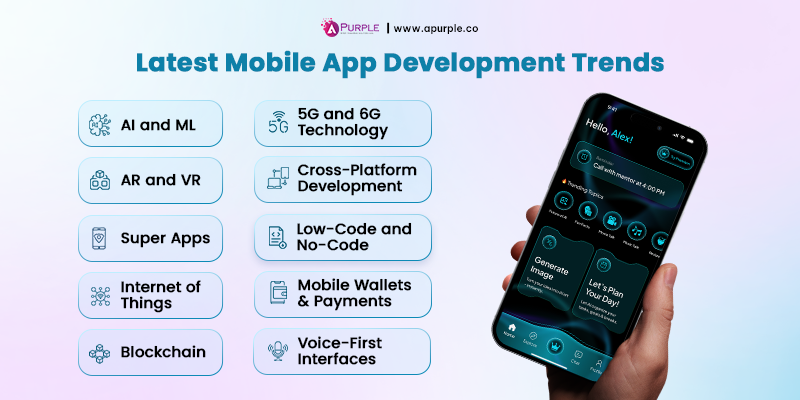
- 1. Artificial Intelligence and Machine Learning
- 2. Augmented Reality and Virtual Reality [AR & VR]
- 3. Super Apps
- 4. IoT (Internet of Things)
- 5. Blockchain Technology
- 6. 5G and 6G Technology
- 7. Cross-Platform and Hybrid App Development
- 8. Low-Code and No-Code Development
- 9. Mobile Wallets & Payments
- 10. Voice-First Interfaces
1. Artificial Intelligence and Machine Learning
AI and ML integration during mobile app development enables learning from user behavior, automating decisions, and delivering highly personalized experiences. In 2026, almost every competitive app development will carry AI at its core and embed some type of intelligence. It includes predictive analytics, AI-powered recommendations, automation, and smart content generation in its product.
Why the AI & ML App Development Trend Matters
AI integration and ML adoption enhance mobile app development in the following ways:
- Boost user engagement.
- Reduce manual tasks.
- Create hyper-personalized user journeys.
All these can simplify the business operation, increase the number of downloads, and keep people coming back to your mobile application.
Challenges With AI & ML Integration [+Solutions]
Check the following table to know possible challenges with AI and ML adoption as a mobile app development trend.
| Challenges | Solutions |
|---|---|
| AI & ML need accurate and large datasets to proceed perfectly. | Always prefer the synthetic data type for storing information and integrating third-party AI APIs. |
| The computing cost is usually higher. | Adopting edge AI or a lightweight on-device model can help you reduce costs. |
Real-World Applications of AI & ML
- Spotify’s integrated AI recommends songs to app users based on mood, time of day, and regular listening patterns.
Pro Tip: Begin with the small AI features and develop an MVP app to check feasibility before investing money in building full-scale automation.
2. Augmented Reality and Virtual Reality [AR & VR]
AR and VR trends in mobile app development bring immersive digital experiences into everyday solutions by visualizing products, creating virtual tours, or enabling 3D interactions. As the days go by, Apple Vision Pro and Meta devices are rising, and the AR/VR tech in mobile apps is entering mainstream use.
Why the AR & VR App Development Trend Matters
AR and VR technology are about serving real experiences to users on a digital platform. So, users can decide better and enjoy exploring.
- Improves product understanding.
- Enhances user engagement through virtual reality.
- Reduces return rates in eCommerce.
Challenges With AR & VR Integration [+Solutions]
Find the table below to check challenges with AR & VR tech if you adopt it as one of the current trends in mobile app development.
| Challenges | Solutions |
|---|---|
| The mobile app development cost is high with AR and VR integration. | Implement ARKit, ARCore, or third-party AR/VR frameworks to speed up the development process. |
| Device limitations can impact performance. | Before integrating AR/VR, optimize 3D models and assets for mobile devices. |
Real-World Applications of AR & VR
- IKEA’s application lets users open their phone camera and preview furniture in their home environment using augmented reality.
Pro Tip: Leverage AR technology and ask people to “try before you buy.” This way, you can attract a huge audience and boost conversions drastically.
3. Super Apps
Super app development trend combines multiple services in one platform, such as payments, messaging, food delivery, ride-hailing, shopping, and more. Instead of users having to download multiple apps for different purposes, one system handles all daily routine activities.
Why the Super App Development Trend Matters
Building a super app is becoming one of the most popular concepts for startups and enterprises, as it’s an all-in-one digital platform. Check how it leads to crafting a profitable business.
- Boosts customer loyalty and retention by keeping them inside the same ecosystem for every need.
- Offers multiple revenue streams within one mobile app.
- Reduces customer acquisition cost as it serves built-in network effects.
Challenges With Super App Development [+Solutions]
Have a look at the challenges that need to be faced while performing super app development.
| Challenges | Solutions |
|---|---|
| As it needs to integrate multiple features of different purposes, the architecture is complex and comes with scalability issues. | Prefer the modular microservices approach to build features, so each feature can scale independently later. |
| High chances of feature overloading, which leads to clutter. | Instead of cluttering everything in one place, offer personalized dashboards that show only relevant services. |
Real-World Applications of Super Apps
- Grab application combines multiple services and offers transport, payments, food delivery, and shopping into a single platform for millions of users.
Pro Tip: Hire MVP development services providers like aPurple to check the feasibility of your super app idea with a real-world audience effectively. This way, you can update things according to the audience without investing in a full-fledged product. You need an experienced team to craft complex features of super apps seamlessly.
4. IoT (Internet of Things)
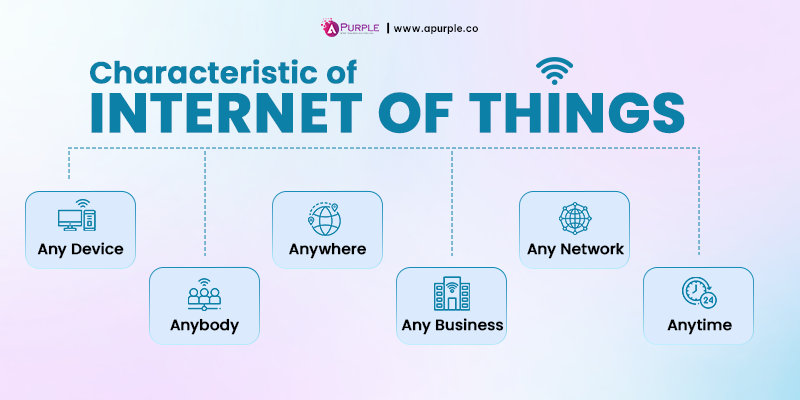
IoT is meant to connect everyday devices such as wearables, appliances, vehicles, and industrial machines with the internet to provide data in real time. This allows mobile apps to monitor, control, and automate operations that establish seamless experiences for both consumers and enterprises. Check the following to learn the characteristics of IoT that define how it connects everything seamlessly.
Why the IoT App Development Trend Matters
Check the following points to know how IoT makes a difference with mobile applications.
- Provides secure real-time monitoring and control over different devices.
- Enables automation and performs predictive maintenance.
- Helps in implementing new revenue streams through subscription-based services or data insights.
Challenges With IoT Integration [+Solutions]
If you are planning to implement IoT as one of the emerging trends in mobile app development 2026, then you must check the following challenges associated with it.
| Challenges | Solutions |
|---|---|
| The security risk is quite high due to the connected device system. | Make sure to implement end-to-end encryption, multi-factor authentication, and regular firmware updates. |
| Device limitations can impact performance. | Follow standard IoT protocols such as MQTT and ensure your mobile application is supported on multiple devices. |
Real-World Applications of IoT
- The Google Home app uses IoT to connect and control smart home devices such as lights, thermostats, and security cameras.
Pro Tip: Design an IoT dashboard that is very simple, intuitive, and easy to understand. Overcomplicating device control can cause less adoption.
5. Blockchain Technology
Blockchain technology is a concept of decentralization, in which it acts as a decentralized digital ledger that records transactions securely and transparently. These new trends in mobile app development ensure data cannot be altered or tampered with. Apps can perform payments, identity verification, digital ownership, and supply chain tracking, ideally with blockchain technology.
Why the Blockchain Mobile App Development Trend Matters
Most mobile apps use blockchain technology for crypto concepts, secure document storage, loyalty programs, ticketing, KYC processes, and smart contracts. Check how it benefits:
- Helps in creating trust between users and the platform.
- Enables secure, transparent transactions without having third-party interference.
- Improves user data protection and reduces fraud risks.
Challenges With Blockchain Technology [+Solutions]
Discover challenges associated with blockchain technology while doing mobile app development.
| Challenges | Solutions |
|---|---|
| There are possibilities of getting transaction speeds slow on some of the blockchains. | To get faster throughput, use Layer-2 networks such as Polygon or Optimism. |
| The onboarding process is highly difficult for non-technical users. | Before integrating AR/VR, optimize 3D models and assets for mobile devices. |
Real-World Applications of Blockchain
- Binance uses blockchain technology and secure transactions, identity verification, and wallet operations for millions of users globally.
Pro Tip: Don’t force your app to integrate blockchain technology. Preferably, use it where you find transparency and trust are essential.
6. 5G and 6G Technology
5G and 6G (expected around 2030) technology is the next-generation mobile network popular for providing ultra-fast speeds and extremely low latency. For mobile apps, it offers capabilities that were not possible with the 4G network. It gives smoothness in real-time gaming, HD/4K streaming, IoT connections, AR experiences, and instant data transfer.
Along with 5G, its upgrade to 6G is already on the way. The 6G network is projected to arrive around 2030, which shifts mobile networks from being fast to being intelligent. 6G integration is expected to unlock AI-driven experiences, holographic communication, ultra-immersive “Internet of Senses” applications, and massive device connectivity at a scale never seen before.
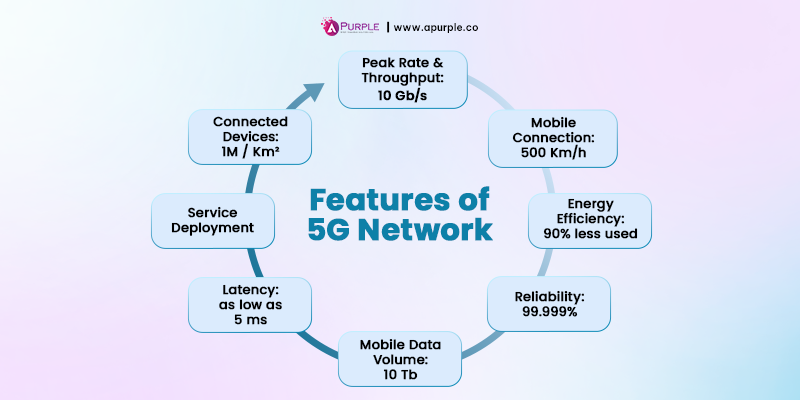
Why the 5G Trend Matters in App Development
Most new phones are 5G integrated, enabling apps to load faster, sync instantly, and deliver high-quality content. Check how it works profitably for mobile apps:
- Allows lag-free cloud gaming and AR/VR apps.
- Supports real-time data exchange with high-quality networks for fintech, health, and IoT apps.
- Improves user experience with faster load times, refreshment, and smoother media.
Challenges With 5G Technology [+Solutions]
Find out the challenges that come when 5G network integration is done, as the current mobile app development trend.
| Challenges | Solutions |
|---|---|
| Currently, the 5G network is not available to all regions and doesn’t give full coverage. | Build adaptable app features for any industry that gracefully fall back to 4G performance whenever required. |
| 5G integration increases the battery consumption. | Optimize network requests and cache static content to reduce battery usage. |
Real-World Applications of 5G Technology
- NVIDIA GeForce Now relies on 5G network integration to deliver cloud gaming experiences without having lags or FPS drops.
Pro Tip: Use a 5G network to upgrade your most useful heavy app features into real-time experiences.
7. Cross-Platform and Hybrid App Development
Cross-platform (Flutter, React Native) or hybrid app development allows startups to build a single application that can work on multiple platforms, such as Android and iOS. This leads to a reduction in development time, effort, and cost, which makes it a perfect mobile app development market trend for startups and MVPs.
Why the Cross-Platform and Hybrid App Development Trend Matters
Modern mobile app development frameworks are more powerful than before; cross-platform and hybrid app frameworks give near-native performance, consistent UI, and support for complex app features. Check how these future mobile app development trends make a difference for startups.
- Saves 40–50% in mobile app development time.
- Reduces long-term maintenance costs associated with mobile apps.
- Keeps design and functionality the same and consistent across different platforms.
Challenges With Cross-Platform or Hybrid Apps [+Solutions]
Discover challenges associated with the cross-platform or hybrid mobile app development trend.
| Challenges | Solutions |
|---|---|
| A single codebase is easy, but a hybrid solution faces difficulties in implementing hardware-heavy features. | Prefer opting for native modules when they require cameras, sensors, or advanced interactions. |
| UI performance can get disturbed if complex animations are implemented. | Optimize rendering and avoid crafting heavy widget trees. |
Real-World Applications of Cross-Platform or Hybrid Apps
- Alibaba has used Flutter to ensure all the platform and user devices have a consistent design and performance.
Pro Tip: Take advantage of this cross-platform trend to save MVP development costs with a single codebase, which lets you test your app on various platforms.
8. Low-Code and No-Code Development
Low-code/no-code platforms are for performing quick app development by using drag-and-drop interfaces and pre-built components. These current trends in mobile app development 2026 are perfect for founders who want to validate ideas fast without investing much in engineering.
Why the Low-Code/No-Code App Development Trend Matters
Low-code tools have evolved into powerful platforms that seamlessly support app workflows, automations, databases, and even AI features. Discover how it benefits startups:
- Accelerates the speed of development and iteration cycles in the process.
- As there is no complexity in the code, it reduces dependency on technical teams.
- Significantly reduce the early-stage mobile app development costs.
Challenges With Low-Code/No-Code Trend [+Solutions]
Check the following table to know possible challenges with low-code/no-code adoption as the latest mobile app development trend.
| Challenges | Solutions |
|---|---|
| Scalability is limited for large mobile apps. | Prefer low-code for PoC or Prototype or MVP, then transition to custom-coded apps for scale. |
| Vendor lock-in or platform is highly chargeable. | Consult or do great research to pick only those platforms that allow exporting code or data. |
Real-World Applications of Low-Code/No-Code
Pro Tip: With 10+ years of experience in startup consulting services, we must suggest that you use no-code for fast testing, but don’t rely on it long-term for user-heavy apps.
9. Mobile Wallets & Payments
Mobile wallets allow app users to pay, transfer money, manage subscriptions, and make secure in-app purchases. As digital purchases are dominating the markets globally, offering a seamless payment system is the core requirement for modern apps.
Why the Mobile Wallets as App Development Trend Matters
Most of the mobile apps offer one-tap checkout to their customers by integrating digital wallets or payment gateways. For startups, it can directly impact conversions and trust. Check how it benefits:
- Faster checkouts with secure payment gateway integration improve user experience.
- Reduces friction and hassle, mostly in eCommerce and subscription apps.
- Builds trust within app users with secure and predictable payment flows.
Challenges With Mobile Wallets Integration [+Solutions]
Find out the challenges associated with mobile wallets and payment gateway integration while doing mobile app development.
| Challenges | Solutions |
|---|---|
| Chances of payment failures due to technical errors frustrate users quickly. | Integrate multiple gateways to ensure all payment methods don’t fail together, and automatic fallback routes. |
| Payment information is sensitive data of users, which is why security risks during transactions are possible. | Ensure your payment system in the mobile app is integrated with tokenization, fraud detection, and PCI-DSS compliance. |
Real-World Applications of Mobile Wallets
- Apple Pay offers users a one-tap secure payment method throughout the apps, stores, and online platforms.
Pro Tip: Every mobile application that requires transactions should integrate at least one mobile wallet; it ultimately maximizes conversions.
10. Voice-First Interfaces
Voice-first interfaces in mobile apps let users interact with the application using voice commands instead of doing any tapping, scrolling, or typing. With cutting-edge advancements in NLP and AI-powered smart assistants, voice is becoming a natural medium to navigate apps, search, and perform quick actions seamlessly.
Why the Voice-First Interfaces App Development Trend Matters
Voice-first experiences make users engaged and are crucial for accessibility, hands-free operations, and faster user interactions. Check how it makes a difference from ordinary surfing.
- Makes mobile apps more accessible to older or visually impaired users.
- Speeds up common and quick tasks such as search, reminders, and commands.
- Enhances user convenience and reduces friction in using complicated features.
Challenges With Voice-First Interfaces [+Solutions]
Find challenges and their solutions in the following table associated with this mobile app UI/UX and development trend of voice-user interfaces.
| Challenges | Solutions |
|---|---|
| There are accuracy concerns due to different accents or background noise. | Train models by using diverse datasets from different regions and add noise cancellation. |
| Privacy concerns due to everyday voice recordings. | Ensure your app uses on-device processing and transparent permission requests. |
Real-World Applications of Voice-First Interfaces
- Alexa is the biggest example of voice-first interfaces that allow users to control home devices, play media, and shop through voice-only interactions.
Pro Tip: We must suggest integrating a voice-first interface only for those features that genuinely improve speed; avoid forcing it for every action.
Final Thoughts On Mobile App Development Trends
Everybody knows that the mobile app market is growing faster than ever, and the upcoming years will only benefit those founders and product teams who act early. That means knowing and implementing mobile app development trends 2026 faster can make the difference between leading the market and chasing it. If you want to be a startup that scales, then adopting these innovations like AI, AR/VR, or voice-first interfaces can be your best option to prepare you for tough competition.
To win this competitive era, you need a tech partner that can upgrade your existing app or build a future-ready product from scratch with these trends. As a modern mobile app development company, aPurple can help you match the trends into real-world, revenue-focused solutions. Ready to build an app that’s ahead of 2026? Let’s shape it together.
Frequently Asked Questions (FAQs)