Updated Date: Apr 9, 2026
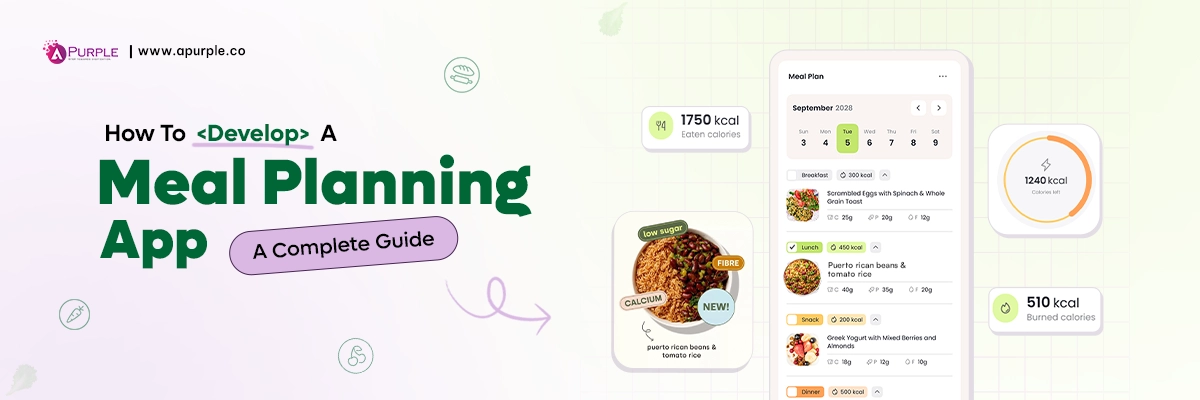
It’s 5 PM in a busy US home, and you find yourself staring into the refrigerator. It is full, but nothing fits together. This struggle with meal planning is very common, whether due to a busy schedule or diet restrictions. That daily chaos is exactly where founders are finding meal planning app development opportunities.
These apps can help to organize meals, find new recipes, and streamline the grocery shopping experience. But founders may face challenges like the cost to build and launch or the integration of grocery delivery apps.
This blog breaks down the types of meal planning app development, cost, and challenges with solutions. From understanding the market to designing a user-friendly experience, this blog covers everything you need to know to create your meal planning app.
What are the Types of Meal Planning & Diet Planning Apps?
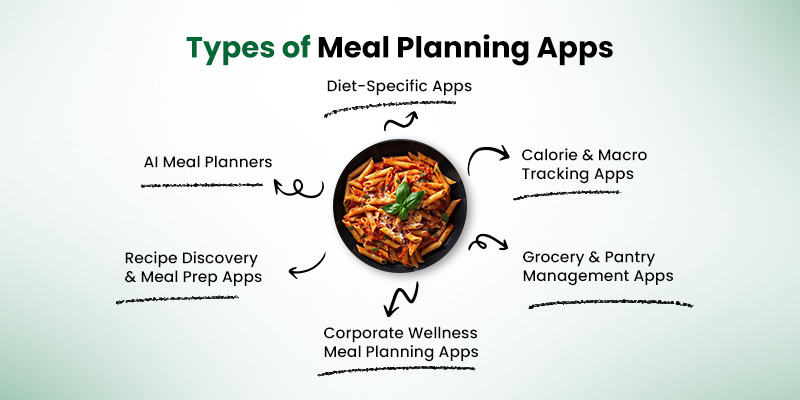
1. Calorie & Macro Tracking Apps
These types of apps focus on logging daily food intake and monitoring energy and nutrient balance. They are specially designed for fitness enthusiasts, athletes, or those with specific goals.
- Example: MyFitnessPal
- Revenue Model: Freemium (monthly subscriptions for advanced nutrient analysis).
2. AI Meal Planners
These apps use ML(Machine Learning) to generate custom eating schedules, which are based on real-time user data and preferences. AI-powered meal planning app development helps users who have changing tastes or are pursuing a fitness goal.
- Example: Mealime
- Revenue Model: Subscription model for exclusive recipes and nutritional insights.
3. Recipe Discovery & Meal Prep Apps
These meal planning apps offer a digital cookbook that prioritizes batch cooking and kitchen workflows. You can start a meal prep business from home if you’re cooking in bulk.
- Example: Cooklist
- Revenue Model: Affiliate commissions from integrated grocery delivery services and premium meal plan access.
4. Diet-Specific Apps (Keto, Vegan, Diabetic, etc.)
These apps provide curated meal plans and ingredient filters strictly limited to specific medical or lifestyle dietary requirements. They serve users with health conditions like diabetes or those committed to strict lifestyle diets like keto or veganism.
- Example: Carb Manager (Keto)
- Revenue Model: Subscriptions for specialized meal plans and health-tracking integrations.
5. Grocery & Pantry Management Apps
These platforms focus on inventory tracking to reduce food waste and streamline the shopping experience. They are ideal for organized households and budget-conscious shoppers who want to cook based on what they already own.
- Example: PantryCheck
- Revenue Model: One-time purchases for pro features.
6. Corporate Wellness Meal Planning Apps
These are B2B platforms integrated into employee benefit packages to promote workforce health and productivity. They are built for HR departments and large organizations looking to lower insurance premiums and improve employee engagement.
- Example: Lifesum (Business version)
- Revenue Model: Annual licensing fees based on the number of active employees or per-seat pricing.
You May Also Like: Innovative Food Business Ideas
What are the Must-Have Features of Meal Planner Apps?
A meal planner app should be easy to use and solve decision fatigue and shopping friction. All the top-rated meal planning apps have a few common features, which you should also consider when you build a meal app.
Here are some meal planning app features that make a meal planner app user-friendly:
-
Flexible Calendar (Drag-and-Drop)
A flexible calendar helps users if they skip a meal as they planned. A rigid calendar is one of the top reasons people delete these apps.
-
Smart Substitutions & Pantry Sync
Use what users have to find recipes already in their saved library. This feature helps with fast meal preparation and offers more convenience to the user.
-
Cooking Guide
The app should provide a step-by-step guide with simple cooking instructions with timers. This meal planning app feature offers simple guidance without getting confused.
-
Automated Shopping Lists
One of the must-have meal planning app features is creating a list of all ingredients according to the user’s preferences and recipe requirements. This list should be grouped by items like produce, dairy, and frozen.
-
Recipe Collection
A meal planner app development must include features like multiple recipes imported from different cuisines. This helps users search for recipes based on their diet.
-
Smart Device Connection
Adding smart device connections with smart kitchen appliances like ovens or slow cookers. Users can easily control cooking settings directly from the mobile app.
-
Multi-User/Family Sync
Meal planning for multiple users can be very beneficial for both the user and the business owner. It increases the number of subscribed users and shares grocery lists with easy meal preparation.
-
Nutrition Tracking
Even if it’s not a calorie-counting app, users still want to see the nutrition like protein, carbs, and fats. Also, the total calorie count per serving ensures they hit basic health goals.
-
Offline Meal Access
Add offline access when you build a meal app so it can work without the internet as well. Users should be able to view their meal plans in case of a limited or no network zone and update automatically once they go online.
What are the Advanced Features of Meal Planner Apps?
Offering advanced features to users when you build a meal plan based on their unique needs can change the simple platform into a proactive health assistant. Here is the breakdown of how these technologies function and their specific benefits for the user.
| Feature | What It Does | Why It Matters |
|---|---|---|
| Personalized Meal Recommendations | Using AI to suggest recipes based on individual diets like keto or vegan. Also helps with local ingredient availability and budget. | Provide tailored options that reduce decision fatigue and align with a user’s health goal. |
| Predictive Nutrition | Analyzes planned meals to forecast future health metrics. Find potential nutrient gaps or blood glucose responses. | Diet adjustments before a health issue occurs. This improves long-term chronic disease management. |
| Food Image Recognition | AI-powered meal planning app development with food image recognition, food items, and estimated portion sizes/nutrients from a single photo. | Increase in consistent meal tracking that reduces the friction of manual logging. |
| Chat-Based Coaching | Provides a 24/7 conversational LLM interface for instant nutrition advice. | Offers immediate, low-cost access that increases patient engagement and adherence. |
| Wearables Integrations | Devices like Apple Health or Google Fit can pull real-time activity and metabolic data. | Allows the app to dynamically adjust caloric and macro needs based on actual energy expenditure and biometric recovery. |
Read More: Most Profitable Food Business Ideas
What Are the Key Technologies Used to Develop a Meal Planner App?
Building a meal planning app relies on a tech stack that balances high-performance mobile frontends with backends. Here are the technologies that you can use in meal planning app development.
| Category | Recommended Technologies | Purpose / Function |
|---|---|---|
| Mobile Frontend | React Native, Flutter | A single codebase to run on both iOS and Android. |
| Backend & API | Node.js, Python/FastAPI | Handling backend operations of the app. Perform user logic on data processing. |
| Database | PostgreSQL, MongoDB | Storing structured user data. |
| AI | OpenAI API, LangChain | Power chat-based coaching and also smart recipe importing. |
| Computer Vision | Google Cloud Vision, TensorFlow Lite | This enables food image recognition for tracking. |
| Grocery Integration | Instacart Connect, Whisk API | Shopping lists sync in the app directly to online grocery carts. |
| Wearable Sync | Apple HealthKit, Google Fit SDK | Track sleep and other activities and predict nutrition. |
| Cloud Hosting | AWS, Firebase | Providing scalable servers and file storage. |
How to Build a Meal Planning App?
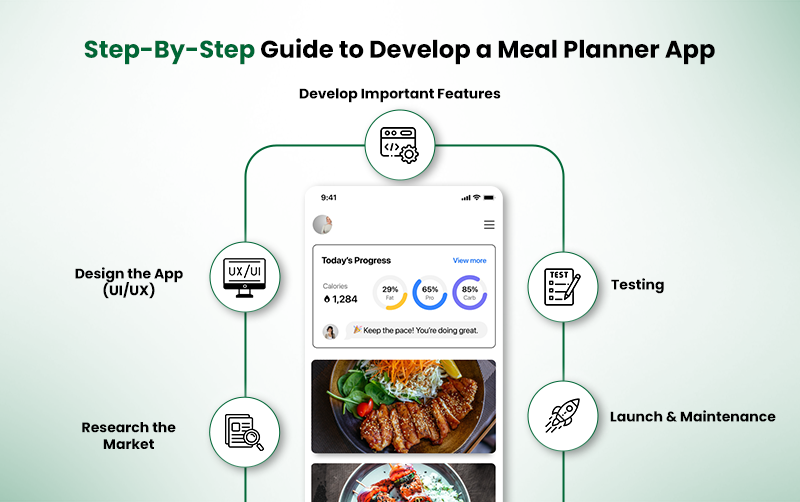
Building a meal planner app can be a complex process if you do not follow a step-by-step approach. Here are 7 easy steps that will help you to build a meal app.
-
Research the Market
Before starting development, you must clear all the objectives and analyze the competitors. Go through the gap analysis and trends. Decide on features, platform (IOS or Android), and revenue model.
-
Design the App (UI/UX)
Plan your meal planner app with a design that looks good in terms of visuals, is easy to use, and follows trends. An intuitive design helps users to find what they need quickly.
-
Develop Important Features
You can go for an MVP development where you only target planned pain points for users with simple designs. It helps you with app validation in the market and the potential for scalability. Add basic features like a recipe library, a diet plan, or a meal of the week. Also, features like tracking nutrients and calories make the app more engaging.
-
Testing
Test the app before launching on different devices to check for bugs. Get feedback from different testing approaches and fix them. Testing ensures the meal planning app development is bug-free.
-
Launch and Maintenance
Once the app is ready, launch it on marketplaces like the App Store and Play Store. Get the feedback for future maintenance and scalability.
How Much Does It Cost to Build a Meal Planning App?
The meal planner app development costs you USD 15,000 to 50,000+, which depends on different factors like design, features, and platforms (Android, iOS, or both).
Here is the cost by app complexity
| Complexity Level | Features Included | Estimated Cost (USD) | Timeline |
|---|---|---|---|
| Basic (MVP) | User profile management, recipes, calendar, shopping list | 10,000 – 50,000 | 6-12 Weeks |
| Medium | API integrations, social features, and payment gateways | 50,000 – 90,000 | 3-6 Months |
| Advanced | AI-driven recommendations, food image recognition, wearable sync, chat coaching | 100,000 – 150,000+ | 6-9+ Months |
How to Monetize Your Meal Planning App?
Meal planning apps are profitable if you select the right revenue model for your app. You need to balance user value and revenue streams. Here are the types of models to monetize your app.
-
Subscription Models (SaaS)
The most common and predictable revenue source is where you offer basic features and functionalities for free and charge for pro features. You can decide pricing on a monthly, annual, and multi-user basis.
-
Affiliate Model (Grocery & E-Commerce Integration)
Partner with services like Instacart or Walmart and earn a small percentage of the total basket. Also, partner with food brands to feature their products.
-
B2B & Partnership Revenue
You can sell to organizations instead of selling to individuals. Go for corporate wellness and gym partnerships for more predictive revenue.
What are the Core Challenges in Meal Planning App Development?
There are several challenges that you may face in meal planning or diet plan app development. Addressing these technical challenges is essential for building a reliable app.
| Challenge | Impact | Solution |
|---|---|---|
| Data Accuracy | Incorrect data can lead to poor health outcomes. | Integrate authoritative sources like the USDA FoodData Central API for verified data. |
| User Retention | Users may experience loss of motivation, leading to high churn rates. | Implement streak reward and push notification. |
| HIPAA/GDPR Compliance | Strict legal and security compliance to protect user privacy. | Deploy encrypted data storage and utilize role-based access control. |
| AI Model Accuracy | Generic AI suggestions do not work for an individual. | Continuous training loops for better results. |
| App Performance | Slow search results because of the food database. | Use highly efficient database queries. |
| Cross-Platform Consistency | Cross-platform increases the development cost. | Use React Native or Flutter to build a shared codebase. |
Why Choose aPurple for Your Meal Planning App?
Developing a meal planning app is not that easy. You need to deal with compliance, low retention, and data privacy.
One wrong decision can cost you time and money. That’s where you need an experienced partner like aPurple with expertise in profitable app ideas. With more than 10 years of experience aPurple can be your ideal partner.
Are you ready to turn your idea into a secure, scalable, and compliant Meal Planning App? Talk to our experts to get a clear roadmap for building a winning product.
Frequently Asked Questions